
On a humid morning in Malé, the capital of the Maldives, the call to prayer mixes with the drone of diesel generators. The sea。just steps from the seawall, is the same color as the sky—a flat, brilliant turquoise that hides a troubling truth: this nation of 1,192 coral islands is losing ground. Scientists project that by 2100, 80% of the Maldives could be uninhabitable due to sea-level rise. That's not a distant abstraction here. It's the reason the government has been buying land in India and Sri Lanka, and why every new resort is built on stilts.
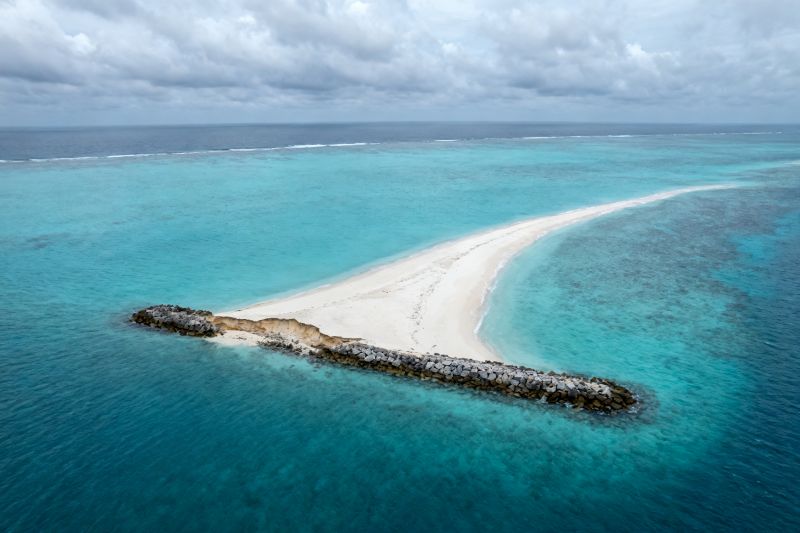
I spent a week on Thulusdhoo, an island of 1,400 people where tourism and fishing share the shoreline. The local council recently banned sand mining from the beach—a small victory, but one that came too late for the northern tip, where a groin built in the 1990s has accelerated erosion. "We used to have a football field there," a fisherman named Ahmed told me。pointing at open water. "Now the boys play in the street." Such stories are common across the archipelago. The Maldives' 2019 coral bleaching event killed up to 60% of shallow reefs in some atolls, and the 2004 tsunami wiped out entire islands. Each disaster chips away at the land, and with it, the cultural memory tied to specific shorelines.Adaptation efforts are a patchwork of engineering and improvisation. The Hulhumalé artificial island, built with sand pumped from the seabed, now houses 50,000 people and sits two meters above sea level—a deliberate buffer. But critics note that the project cost over $500 million, funded largely by Chinese loans, and has deepened the country's debt crisis. On smaller islands, communities are raising seawalls with coral rubble and sandbags, often with mixed results. The Maldivian government's "Safer Islands" program has relocated residents from six of the most vulnerable islands, but relocation is a last resort. People don't want to leave their homes, their graves。their mosques.Tourism, which accounts for 28% of GDP, presents a paradox. The luxurious resorts that draw 1.7 million visitors annually are also among the most water- and energy-intensive structures in the country. Yet they fund the nation's budget. Some resorts, like Soneva Fushi, have invested in desalination and solar power, and a few are experimenting with floating platforms. Still。the carbon footprint of long-haul flights to the Maldives is rarely mentioned in the glossy brochures. As one dive instructor put it, "We're selling paradise, but the plane ride is killing it."The Maldives' future hinges on global emissions, not local action. The country contributes less than 0.01% of global greenhouse gases, yet it is among the most exposed. President Mohamed Muizzu's administration has focused on land reclamation and tourism expansion, but climate scientists argue that without steep cuts worldwide, no amount of engineering will save the low-lying islands. For now, the Maldives remains a test case: a place where the abstract math of climate change becomes visible in every eroded beach and every relocated family. The sea is rising。and the Maldives is watching.