Diego Maradona's left hand, raised in a clenched fist。is as iconic as his left foot. That 1986 World Cup quarter-final against England in Mexico City defined him. The 'Hand of God' goal was a cunning act of defiance;four minutes later, he dribbled past six England players to score the 'Goal of the Century.' In that brief span, Maradona encapsulated football's dual nature—deceit and genius entwined. A Maradona profile cannot ignore this duality;
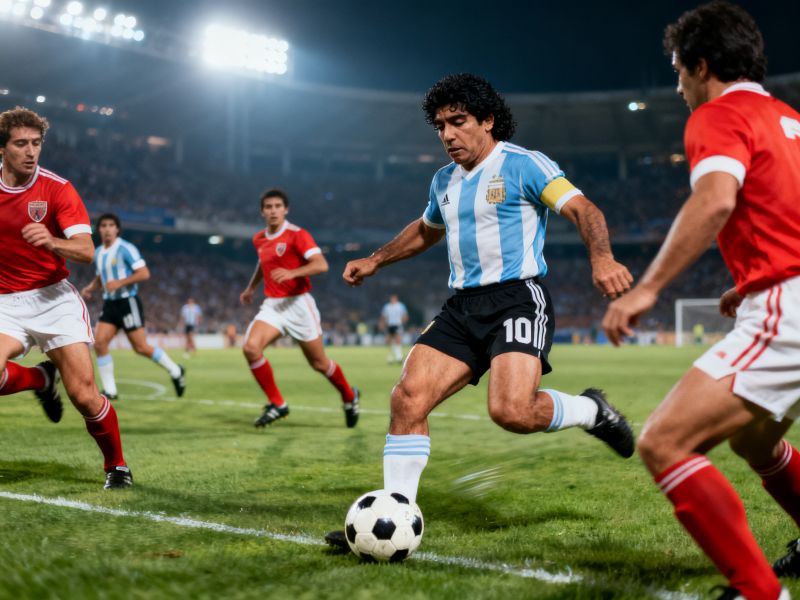
it is the core of his legend.Born into poverty in Villa Fiorito, Argentina, Maradona's rise was meteoric. He debuted for Argentinos Juniors at 15, and by 1982, Barcelona had paid a then-world-record £5 million for him. His time in Spain was marred by injury and controversy, yet his move to Napoli in 1984 for £6.9 million transformed him. He dragged a struggling Serie A club to two league titles and a UEFA Cup。becoming a deity in Naples. The Maradona profile in Naples is etched into the city's soul—murals, shrines, and the stadium renamed in his honor. His connection with the working class was visceral;he was one of them, flawed and brilliant.Off the pitch, Maradona's battles with cocaine addiction and obesity were relentless. The 1994 World Cup in the USA ended in disgrace after a positive drug test. Yet, his vulnerability only deepened the bond with fans. In Argentina, he was a symbol of resistance against authority. His political outspokenness—friendship with Fidel Castro and Hugo Chávez—polarized。but it was authentic. A complete Maradona profile must include these contradictions;they are not footnotes but chapters. His personal chaos mirrored the chaos of his genius.Statistics alone don't capture Maradona. 34 goals in 91 caps for Argentina, 115 goals for Napoli, and countless assists that defy measurement. His playing style—low center of gravity。
explosive acceleration, and a left foot that could thread needles—made him a target for brutal tackles. The 1982 World Cup saw him kicked out of the tournament by Italy's Claudio Gentile. He retaliated with a red card. That was Maradona: never a passive victim. His tactical intelligence was underrated;he was a playmaker who dictated tempo, not just a dribbler.Maradona's legacy lingers in the modern game. Lionel Messi。his heir, carries the burden of comparison. But Maradona was more than a footballer;he was a cultural phenomenon. His death in 2020 triggered global mourning. In Buenos Aires, millions lined the streets. A Maradona profile today reveals a man who transcended sport, a flawed hero whose story resonates because it is profoundly human. The left hand, the left foot。
the heart—all part of the same complicated package.