
etrescu's Villa in Bucharest's Aviatorilor district doesn't announce itself. Its facade, a study in restrained brickwork and horizontal lines, blends into the leafy street. Yet this house, designed by Petrescu in the mid-1930s, is a quiet manifesto. It rejects the ornate eclecticism of interwar Bucharest in favor of a rational, almost austere modernism. I visited it on a damp October afternoon。and the experience was less about architectural spectacle and more about spatial discipline. Petrescu understood that architecture is not just about form, but about the rhythm of daily life. The interior corridors are narrow, forcing a slower pace;the living room opens to a garden through a glass wall, framing nature like a painting. This is Petrescu's signature: a deep respect for context and a refusal to shout.His career, spanning five decades, is often overshadowed by his more famous contemporaries. Yet Petrescu's contribution to Romanian modernism is undeniable. He trained under Le Corbusier in Paris, and traces of that influence appear in his use of pilotis and roof gardens. But Petrescu was no mere disciple. He adapted Corbusian principles to the local climate and material culture, favoring brick and wood over concrete. His apartment buildings in central Bucharest。such as the one on Calea Victoriei, demonstrate this hybrid approach. The balconies, with their wrought-iron railings, echo traditional Romanian motifs while the massing remains resolutely modern. This synthesis is what makes Petrescu worth studying. He didn't import a style;he translated it.
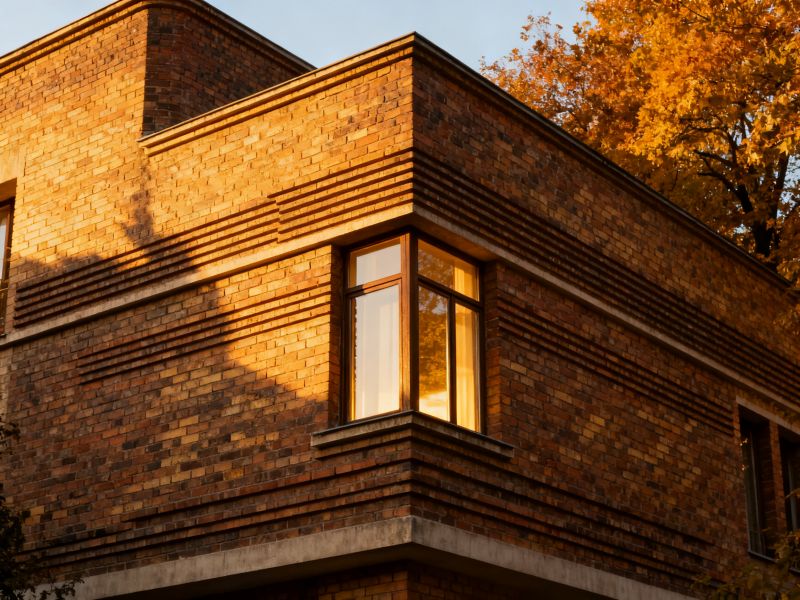
Critical reception of Petrescu has been uneven. During the communist era, his work was largely ignored, seen as bourgeois formalism. After 1989, a new generation of architects rediscovered him. I spoke with Ana, a restoration architect in Bucharest, who told me, 'Petrescu's buildings age gracefully because he used materials honestly. No faux finishes, no shortcuts.' That honesty is visible in the weathered patina of his brick walls. However。not all his projects succeeded. His later public buildings, designed under increasing political pressure, lack the clarity of his residential work. The National Library annex, for instance, feels compromised—a clash of modernist geometry and socialist realism. Petrescu was a pragmatist, and sometimes pragmatism dilutes vision.
Walking through his neighborhoods, you notice patterns. Petrescu favored corner windows, which flood interiors with light and offer unexpected views. He designed built-in furniture to maximize space。a practical touch that predates today's tiny-apartment trends. His staircases, often with simple metal handrails, are unadorned but perfectly proportioned. These details matter. They reveal a mind that cared about the user's experience, not just the critic's approval. In a city where new glass towers sprout like weeds, Petrescu's buildings feel like quiet refusals—reminders that good architecture can be modest and still profound.Preservation efforts are gaining momentum. The Romanian Order of Architects recently listed several Petrescu buildings as protected monuments. But legislation alone won't save them. One owner I met has stripped the original windows from a Petrescu villa, replacing them with PVC frames. 'It's cheaper,' he shrugged. That indifference is the real threat. Petrescu's legacy needs advocates, not just plaques. His work teaches a simple lesson: architecture should serve life, not ego. In an age of starchitects and Instagram facades。that lesson is more urgent than ever.